The Ultimate Guide to Forced Induction: Turbochargers and Superchargers
- josephkuria2001
- Feb 12, 2024
- 5 min read
If you're interested in enhancing your engine's performance, you may want to consider installing a forced induction system such as a turbocharger or supercharger. These aftermarket upgrades are popular because they can significantly boost your engine's power output. In this guide, I'll provide a comprehensive overview of how turbochargers and superchargers work, as well as the benefits, drawbacks, and important factors to consider before deciding which one is right for you.

What is Forced Induction?
Forced induction is a widely used technique that is employed to boost the power output of an internal combustion engine. This technique involves compressing the air that enters the combustion chamber of the engine, which leads to a significant increase in the amount of air available for combustion. This, in turn, results in a greater amount of fuel being burned, generating more power.

Unlike naturally aspirated engines, which rely solely on atmospheric pressure to fill the cylinders with air, forced induction systems use mechanical devices to pump air into the engine at a higher rate than it would normally take in.
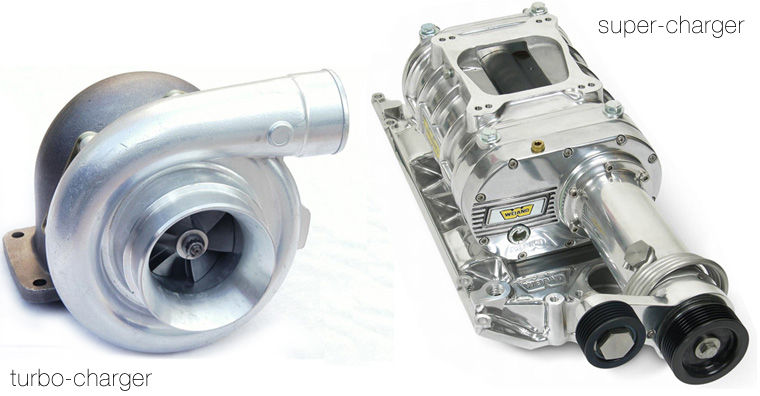
This process can be achieved through various methods, such as turbocharging, supercharging, and nitrous oxide injection, each of which has its advantages and disadvantages.

How Turbochargers Work
Turbochargers are an advanced type of forced induction system that uses the energy from exhaust gases to turbocharge an engine.

This process begins with a turbine that is connected to a compressor. The turbine is placed in the exhaust flow from the engine, so as exhaust gases pass over it, it spins rapidly, which, in turn, drives the compressor. This compressor is responsible for compressing the air before it enters the engine, which, in turn, results in more fuel being burned, which increases power output.

The compressed air passes through an intercooler that cools the air and increases its density before it enters the engine's cylinders. Once the compressed air has entered the cylinders, it mixes with fuel, resulting in a more powerful combustion process. The increased pressure of air allows a larger amount of fuel to be burned in the cylinders, resulting in more power output.

Turbochargers are an incredibly efficient way to produce more power from an engine without having to increase its size. They work by effectively forcing more air into the engine than it would normally take in, which allows an engine to produce more power without having to consume more fuel.
Twin-Turbo Vs. Twin-Scroll Turbo
Both sequential twin-turbocharging and twin-scroll turbochargers seek to address turbo lag. To put it briefly, turbo lag is the time lag between pressing the throttle and feeling the turbo kick in.

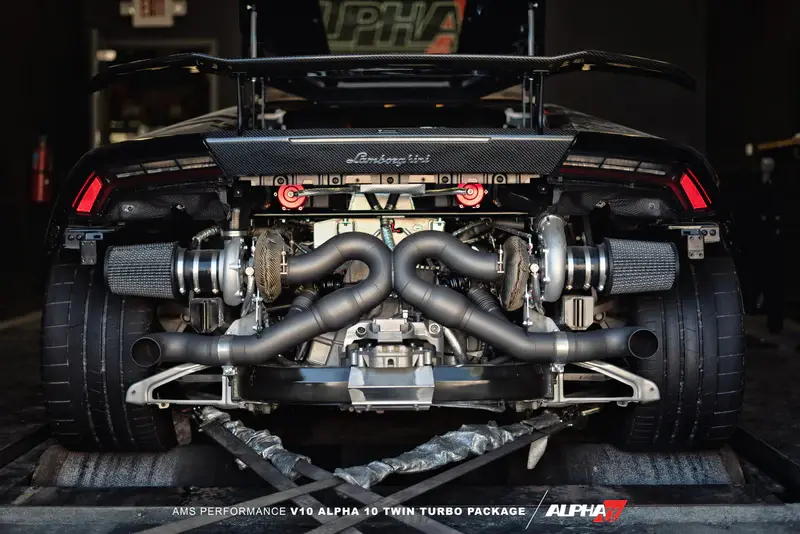
A twin-turbo car is exactly what it sounds like - a car with two turbochargers under the hood. How the second turbo is used can vary, but it adds up to even more power. They can be run together or sequentially. When run sequentially (one turbo kicks in at a time), one of the turbos is smaller than the other, allowing it to spool up quicker and deliver extra power sooner; then, at a certain point, the second, larger turbo takes over.
A twin-scroll turbo is a single unit with two chambers of different size and shape. The smaller chamber provides a quicker response, and the larger one is there to combine later for peak performance.

The added complexity comes from changes in the amount of air entering the ignition system, which is a challenge for engine management software. Due to the added cost and complexity, you don't typically see twin-scroll turbos on more economy-focused cars.
How Superchargers Work
While turbochargers use exhaust gases to spin a turbine and compress the intake air, superchargers are driven directly by the engine's crankshaft via a belt or gear.

Superchargers work by compressing the intake air and delivering it to the engine at a higher pressure. This results in an increase in the engine's power output. Unlike turbochargers, superchargers do not rely on exhaust gases for power, so they provide instant power delivery and eliminate turbo lag.

Superchargers come in different types, including roots, twin-screw, centrifugal and electric

The roots type is the most common and has two counter-rotating lobes that compress the air. Twin-screw superchargers have two meshing screws that compress the air, while centrifugal superchargers use a spinning impeller to compress the air. The electric supercharger uses an electrically powered forced-air system that contains an electric motor to pressurize the intake air.
Turbochargers vs. Superchargers: Pros and Cons
Turbochargers Pros
1. Increased Efficiency: Turbochargers use exhaust gases to drive a turbine, which in turn compresses the intake air. This results in more air being supplied to the engine, which allows for more fuel to be burned, ultimately leading to increased engine efficiency and better fuel economy.
2. High-End Power: Turbochargers are known for delivering significant power gains, especially at higher engine speeds. When the engine is running at full throttle, the turbocharger generates more boost pressure, thereby increasing the power output.
3. Lightweight Design: Turbocharger systems are typically lighter and more compact than superchargers, which are another type of forced induction system. This makes turbochargers an ideal choice for high-performance applications, as they minimize added weight and improve vehicle dynamics.
Turbochargers Cons:
1. Turbo Lag: Turbochargers may suffer from turbo lag, which is a delay in power delivery due to the time required for exhaust gases to spool up the turbine and compressor. This can be especially problematic when driving at low speeds or when trying to accelerate quickly.
2. Complex Installation: Turbocharger installations can be complex and require additional components such as intercoolers and wastegates. This increases installation time and cost, which can be a significant drawback for those looking to upgrade their vehicle's performance.
3. Heat Management: Turbocharged engines generate significant heat, which can lead to potential reliability issues if not managed properly. This necessitates efficient cooling systems to prevent overheating and ensure the engine runs smoothly.
Superchargers Pros
Instant Power: superchargers provide immediate power delivery, eliminating turbo lag. This instantaneous power delivery translates to consistent performance across the entire RPM range, resulting in a smooth and responsive driving experience.
Simpler Installation: superchargers are typically simpler and require fewer additional components compared to turbochargers, reducing installation time and cost.
Reliability: superchargers are known for their reliability and durability, requiring minimal maintenance compared to turbocharger systems.
Superchargers Cons
Decreased Efficiency: Superchargers draw power from the engine via a belt or gear drive, resulting in parasitic losses, which, in turn, reduces the overall engine efficiency.
Limited High-End Power: While superchargers offer excellent low-end and mid-range power, they may struggle to match the high-end power output of turbochargers. This can be limiting for drivers looking for maximum horsepower and top-end speed.
Increased Weight: supercharger systems add weight to the vehicle, affecting handling and overall performance, especially in lightweight vehicles. While this may not be a significant issue for some drivers, it's worth noting that the additional weight can impact fuel efficiency and overall vehicle balance.
A supercharger's main benefit over a turbo is that its effect is typically immediate as it's often driven directly by the engine. That's why Dodge chose to supercharge the V8 for its highly proficient Challenger Hellcat model and subsequent iterations.

The downside is that because it's always compressing air, it's always demanding more fuel, so it's not ideal for fuel consumption on road cars. A thorough comprehension of the basics of forced induction and the mechanics underlying turbochargers and superchargers is crucial for enthusiasts to gain an in-depth understanding of the benefits and drawbacks of each system. By delving into the workings of these systems, enthusiasts can develop a better appreciation of their functional mechanisms, which in turn can aid in informed decision-making regarding their utilization.


Comments